

The Great Migration, Month by Month: Where the Herds Are
This article has been written by Allen
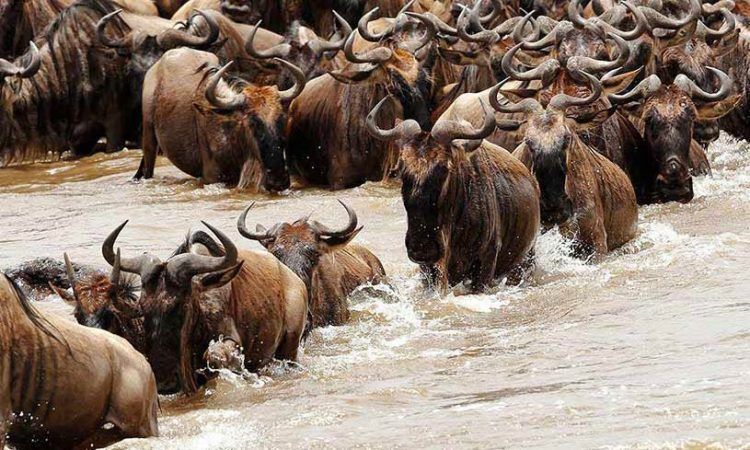
The Great Migration is the largest overland movement of animals on Earth, and most of its drama plays out across Tanzania's Serengeti. More than a million wildebeest, joined by hundreds of thousands of zebra and gazelle, follow the rains in a slow, restless circle through the ecosystem. Lions, cheetah, hyena and crocodiles follow the herds every step of the way.
If you are planning a trip around it, there is one thing to understand before anything else: the migration never stops and never stands still. It is not a single event on a fixed date. It is a year-round journey, and two travellers who both visit the Serengeti in the same year can have completely different experiences depending on the month and the region they choose.
The short version: January to March the herds are calving on the southern plains around Ndutu. April and May they drift north and west with the long rains. June and July bring the Grumeti River crossings. August to October is the famous Mara River crossing season in the north. November and December the herds turn and move back south. Match your dates to a chapter, and to the right region, and you give yourself the best possible seat.
At WildReality Safari, our Tanzanian guides, Filly and Yusuph among them, track the herds daily and build each private itinerary around where the animals actually are, not around a fixed departure schedule. This guide walks the full loop month by month, so you can decide which chapter of the migration you most want to witness.
What is the Great Migration?
The Great Migration is a continuous, year-round journey driven by rainfall and the endless search for fresh grazing and water. Following instinct passed down over generations, the herds move in a huge clockwise loop through the Serengeti ecosystem and across into the Masai Mara, then back again.
It is more than wildebeest. The procession carries hundreds of thousands of zebra and gazelle alongside the million-plus wildebeest, and it moves inside a constant ring of predators: lions working the edges of the herd, cheetah on the open plains, hyena at dusk, and crocodiles waiting in the rivers. That scale is what makes it the greatest wildlife show on the continent.
There is no start line and no finish line. The migration simply turns with the seasons. Because it follows the rain rather than the calendar, the exact position of the herds shifts a little from year to year. Understanding that rhythm, rather than memorising fixed dates, is the real key to seeing it at its best.
Why the Serengeti, not just the Mara
The Mara River crossings in the north get most of the headlines, but they are only a few months of a year-long story, and much of that story belongs to Tanzania. The calving on the southern plains, the Grumeti crossings in the Western Corridor, the long move north, and the return south all happen inside the Serengeti ecosystem.
In other words, Tanzania is where the migration spends most of the year. You can meet the herds here in almost any month if you go to the right region, which is why a trip timed and routed well matters more than simply aiming for one famous crossing.

The year-round cycle at a glance
Here is where the herds are, in broad strokes, through the year. Hold the timings loosely: they move with the rain.
- Jan to Mar, Ndutu and the southern Serengeti plains: Calving season, newborns, heavy predator action
- Apr to May, Central Serengeti, drifting north-west: Long rains, lush green, few vehicles
- Jun to Jul, Western Corridor and the Grumeti River: First river crossings, the rut
- Aug to Oct, Northern Serengeti and the Mara River: The iconic Mara crossings, peak season
- Nov to Dec, Moving south through the central plains: Short rains, the return, build-up to calving
January to March: calving season in the south
The green season brings the migration's most tender chapter. On the short-grass plains around Ndutu and the southern Serengeti, the wildebeest gather to give birth, with many thousands of calves arriving within the same few weeks. A newborn wildebeest can stand and run within minutes of birth, which is astonishing to watch on the open plains.
All that vulnerable young life draws intense predator activity, so sightings of lion, cheetah and hyena on the hunt come thick and fast, sometimes several species in a single morning. The plains are green, the light is clean, and the sheer concentration of animals in one area makes it some of the easiest big-game viewing of the year. For photographers and anyone who wants drama without the northern crowds, this is one of the richest windows there is. It is the heart of our Tanzania's Secret Seasons Safaris, which is built around the calving.
April to May: the long rains and the move north-west
As the long rains arrive and the southern plains lose their best grazing, the herds begin drifting north and west in long, ribboning columns. It is the quietest stretch of the year, with fewer vehicles and a landscape at its greenest and most vivid.
An occasional downpour is the trade-off, but so is some of the best value of the year. For a traveller who prizes space and atmosphere over guaranteed crossings, these months reward you with the Serengeti almost to yourself.
Follow the whole loop with a guide who tracks it daily
The Great Migration Tracker is our 8-day private safari built around the herds, not a fixed schedule. One private 4x4 with a pop-up roof, one dedicated guide, and a route your guide adjusts in real time as the animals move. Tell us your travel window and we will aim you at the right chapter. See the Great Migration Tracker
June to July: the Grumeti River crossings
By June the herds reach the Western Corridor, where the Grumeti River is the first major obstacle of the year. The crossings here are less famous than those at the Mara, but they are genuine river drama, and they come with noticeably fewer vehicles.
June and July are also mating season, so the plains echo with the grunting of the rut and the energy of the migration runs high. For travellers who want crossings and atmosphere before the peak-season rush descends on the north, this is a superb and slightly quieter window.

August to October: the Mara River crossings
For many people this is the migration at its most iconic. In the far northern Serengeti the herds mass along the banks of the Mara River and make repeated, chaotic crossings through fast water and waiting crocodiles. It is one of the most dramatic wildlife spectacles anywhere on Earth, and it is utterly unpredictable.
The herds often gather on the bank for hours, even days, building up courage before a single trigger sends thousands plunging in at once. That unpredictability is exactly why it rewards patience and a guide who can read the signs. Crossings happen on the animals' schedule, not ours.
Because this is the most sought-after experience, it is also the busiest window, and the best camps in the north book out far ahead. If witnessing a Mara crossing is the dream, plan early and give yourself several days in the region so you are not pinning everything on one morning.
November to December: the return south
As the short rains freshen the southern plains, the herds turn and begin the long journey back down through the central and eastern Serengeti. November is a rewarding, uncrowded time to travel, with green landscapes and returning birdlife.
By December the animals are settling back onto the southern short-grass plains and the build-up to the next calving season begins. The great circle closes, and the whole cycle starts again.
Best time and place to see the migration
To sum it up simply: for the river crossings, aim for the northern Serengeti between about August and October. For the calving and the predator action, target the southern plains between January and March. For quieter crossings, the Grumeti in June and July is the insider's pick.
The most common mistake travellers make is booking the right month but the wrong region, then finding the herds are hundreds of kilometres away. Because the timing shifts each year with the rains, the surest way to be in the right place is to travel with guides who track the herds daily and plan your route around them. That is exactly how we build a trip across the Serengeti National Park.

Where to stay by season
Following the migration well often means choosing camps positioned for the season. In the calving months, camps near Ndutu put you among the herds at first light. During the Mara crossings, intimate camps in the north place you within reach of the river.
Mobile and seasonal camps that move with the migration are especially effective, since they follow the herds around the ecosystem so you wake up close to the action. Every camp we use is comfortable without being excessive, chosen for where it puts you rather than for its own sake.
How to plan your migration safari
Start by deciding which chapter of the migration you most want to witness, then build your dates and route around it rather than the other way around. Allow enough days to absorb travel between regions and to give the wildlife time to perform.
It is well worth pairing the migration with the wider northern circuit. The Ngorongoro Crater and Tarangire sit within easy reach and add enormous variety, and the parks are close enough together to keep driving days sensible. A dawn hot air balloon over the Serengeti is the add-on guests mention again and again afterwards.
A private vehicle matters here more than on almost any other safari. When a crossing finally builds, you are not waiting on a shared group's schedule or jostling for a window seat: your guide can hold position for as long as the moment lasts, or reposition the instant the herd shifts. On the migration, that flexibility is often the difference between watching the drama and just missing it.
Above all, travel with a team that knows the ecosystem intimately. The migration rewards local knowledge more than almost any other wildlife experience on the planet. If green-season calving is your focus, our Tanzania's Secret Seasons Safaris is built for exactly that, and our month-by-month Best Time to Visit Tanzania guide goes deeper on weather and crowds.
“We were fortunate to catch the migration in the Serengeti, which made for a bucket list wish ticked. In all we felt safe and looked after in this wonderful country.”
Peter, United Kingdom · TripAdvisor
Frequently Asked Questions
What months are best for the Great Migration river crossings?
The Mara River crossings in the northern Serengeti typically run from around July or August to October, with the exact timing shaped by the year's rains. For earlier, quieter crossings, the Grumeti River in the Western Corridor is active around June and July.
Where is the Great Migration during the calving season?
From roughly December to March the herds gather on the southern Serengeti plains around Ndutu to give birth. It is the best window for newborn wildlife and for concentrated predator action, and it comes with far smaller crowds than the northern crossings.
Can you guarantee we will see a river crossing?
No honest operator can. A crossing is a wild event that happens on the animals' schedule. What makes the difference is a guide who tracks the herds daily and positions you well, plus enough days in the right region to give you the best possible odds.
How many days do I need to follow the migration?
Plan for a week or more. The herds move across a large ecosystem, and you want time to reach the right region and wait for the action. Our Great Migration Tracker runs eight days, with the option to extend for a deeper Serengeti stay or a Zanzibar finish.
Is it worth going during the busy northern-crossing season?
For many travellers, yes, the Mara crossings are a lifetime sighting. If crowds concern you, the Grumeti crossings in June and July offer genuine drama with fewer vehicles. Either way, a private 4x4 and a flexible route keep your experience your own.
What is the difference between the Serengeti and Masai Mara migration?
They are two parts of one loop. The Masai Mara in Kenya hosts the herds for a few months, roughly August to October, when they cross the Mara River. Tanzania's Serengeti holds the migration for most of the rest of the year, including the calving and the Grumeti crossings, so you have far more of the cycle to choose from.
Plan your trip around the herds
Now that you know where the migration is each month, the next step is matching your travel window to the chapter you most want to see. Tell us your dates and what matters most, whether that is the calving drama in the south or a Mara crossing in the north, and we will build a private itinerary around it, usually within 48 hours.
Plan Your Safari
Request a custom, migration-focused itinerary and we will time your trip to put you where the herds are. Start here or message Allen directly on WhatsApp at +255 755 425 859.